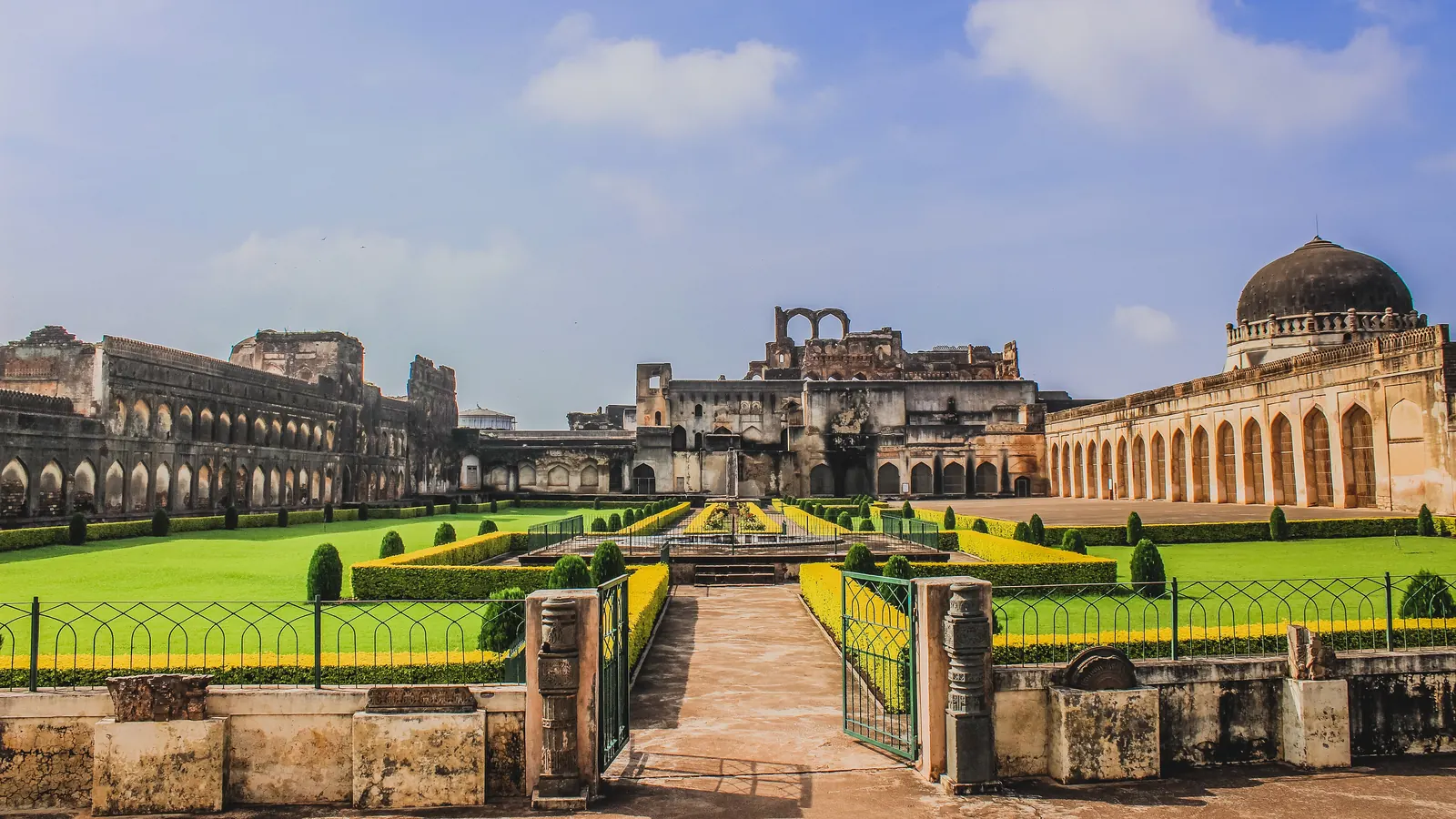
Afanasy Nikitin was a merchant from Tver, a Russian principality on the upper Volga, who travelled to India around 1470 and wrote an account of it called the Journey Beyond Three Seas (Khozhenie za tri morya). He spent about three years in the Bahmani Sultanate of the Deccan, mostly in its capital Bidar, and died on the way home, "before reaching Smolensk", around 1475. Nothing is known about him except what his own text and a short chronicle note say.
His notes are the first known description of India by a Russian. They are also an unusually personal book. Nikitin writes about prices and horses, but also about his loneliness, the loss of his Christian calendar, and pressure to convert to Islam. Some passages he wrote in a mixture of Persian, Turkic and Arabic, in Cyrillic letters, perhaps so that no one around him could read them.
Afanasy Nikitin at a glance
| Name | Afanasy (Athanasius), son of Nikita; called "Ofonas of Tver, a merchant" in the chronicle; the patronymic appears only in one manuscript |
| Home | Tver, then an independent grand principality |
| Journey | Probably about 1467/68 to 1474/75; older books say 1466–1472 |
| Time in India | "4 years", according to the chronicle note; about mid-1471 to early 1474, according to the 1986 edition |
| Main places in India | Chaul, Junnar, Bidar, Gulbarga, Parvat (Srisailam), Dabhol |
| Way home | Hormuz, Persia, the camp of Uzun Hasan, Trebizond, Kaffa in the Crimea |
| Death | Before reaching Smolensk, about 1475 |
| His text | Journey Beyond Three Seas, surviving in chronicle copies and the Troitsky manuscript |
Who was Afanasy Nikitin?
Almost everything we know comes from a note that a Russian chronicler placed in front of the text, under the year 6983 of the Byzantine era, that is, between 1 September 1474 and 31 August 1475:
"That same year I found the writing of Ofonas of Tver, a merchant, who was in India 4 years, and he says he went with Vasily Papin. … I did not find in what year he went or in what year he came from India; he died, and they say he died before reaching Smolensk. And he wrote the writing with his own hand, and those notebooks in his hand merchants brought to Mamyrev Vasily, the grand prince's diak, in Moscow." (chronicle note, our translation)
Vasily Mamyrev (1430–1490) was a senior official of Grand Prince Ivan III of Moscow. Smolensk, where Nikitin was heading, then belonged to the Grand Duchy of Lithuania.
His own text adds a little. He left Tver from the cathedral of the Saviour "with the blessing" of Grand Prince Mikhail Borisovich of Tver and Bishop Gennady. In India he says he took the name "Khoja Yusuf Khorasani", passing as a merchant from Khorasan. The patronymic, "Afonasy son of Mikitin", appears only in the opening line of the Troitsky manuscript and not in the chronicle version, so even his father's name rests on a single copy.
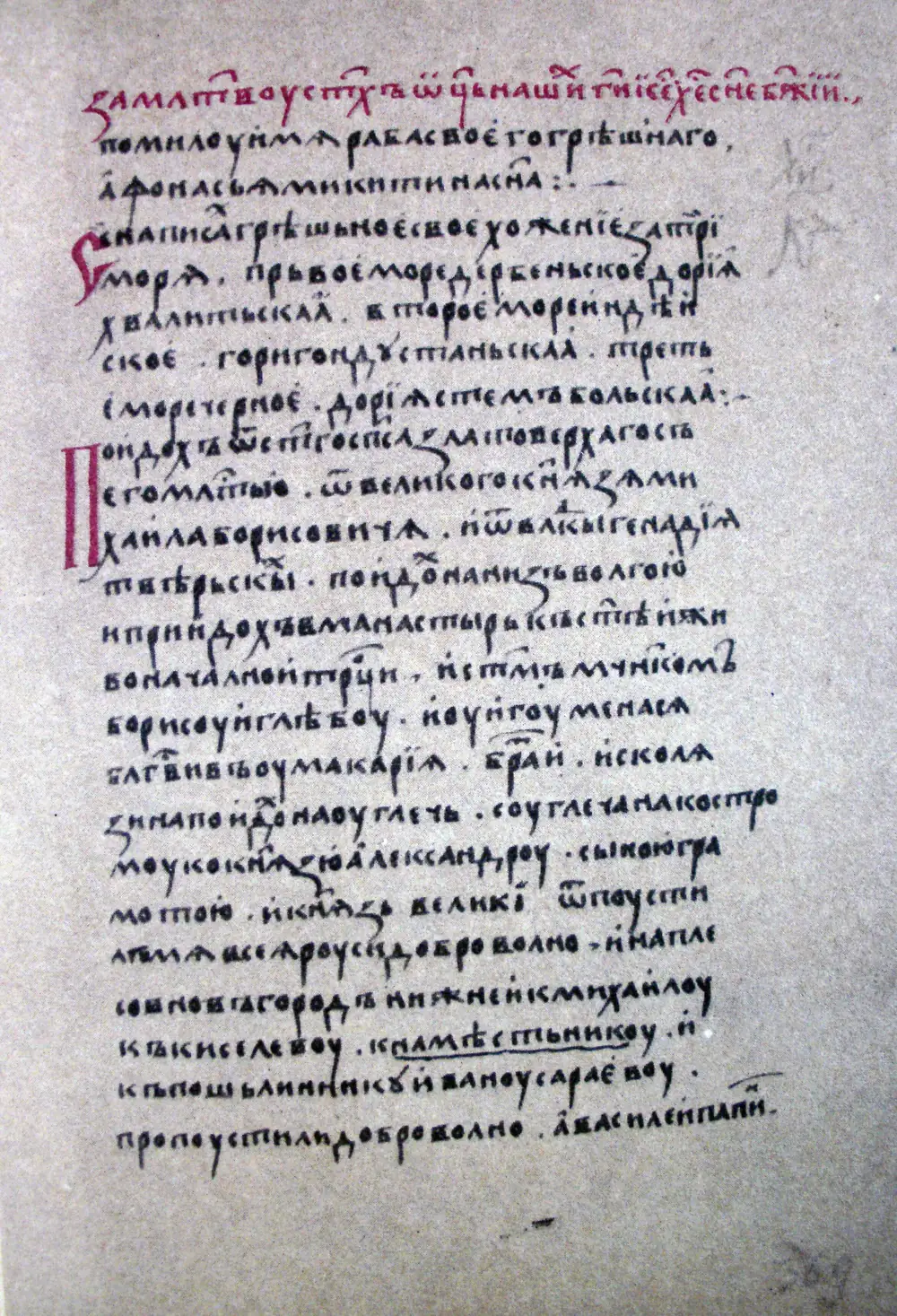
What are the three seas?
Nikitin names them in his first sentence. In the 1857 English translation:
"This is, as I wrote it, my sinful wandering beyond the three seas: the first, the sea of Derbend—Doria Khvalitskaia; the second, the India Sea—Doria Hondustanskaia; the third, the Black Sea—Doria Stembolskaia." (trans. Wielhorsky, in Major 1857)
The first is the Caspian Sea, the second the Arabian Sea and Indian Ocean, the third the Black Sea, which he names after Istanbul. Doria is the Persian darya, "sea". Already in the first line he mixes Russian and Persian.
When did Afanasy Nikitin travel?
Nikitin gives no years. He counts the Easters he spent away from home, and the chronicler admits he could not find the dates. Historians have reconstructed them in different ways:
| Dating | Proposed by | Main argument |
|---|---|---|
| About 1470 | N. M. Karamzin, who discovered the text in the early 19th century | The chronicle note and the Kazan campaign of 1469 |
| 1466–1472 | I. I. Sreznevsky, 1857; the standard dating for over a century | A count of the Easters named in the text |
| 1468–1474/75, in India 1471–1474 | L. S. Semenov, 1978; adopted by Ya. S. Lur'e in the 1986 edition | Dates of events in India that Nikitin mentions, such as the fall of Goa in 1472, and of Muslim feasts |
| Set out in 1467 | S. V. Gorodilin, 2022; supported by A. G. Bobrov, 2024 | Who held office along the Volga in 1467; war between Moscow and Kazan closing the river from autumn 1467 |
The chronicle gives one fixed point. Vasily Papin, the Moscow envoy Nikitin wanted to travel with, was killed at Kazan during the campaign of Prince Yury Vasilievich, which ended in September 1469. The editors of the 1986 edition placed Nikitin in India "from the middle of 1471 to the beginning of 1474". The safest summary is that he set out around 1467 or 1468 and died around 1474 or 1475; the old dates 1466–1472, still found in many books and on Soviet monuments, are no longer accepted by most specialists.
The journey: from Tver to the Caspian
Nikitin sailed down the Volga from Tver past Kalyazin, Uglich and Kostroma to Nizhny Novgorod. There he waited two weeks for Hasan-bek, the envoy of the Shirvanshah, the ruler of Shirvan on the western Caspian shore, who was returning home from Moscow with ninety gyrfalcons, hunting birds that were a prized gift from Ivan III.
The journey went wrong at the mouth of the Volga. Below Astrakhan the Tatars attacked; the smaller boat was taken and plundered, and then the larger one. The travellers were sent on, robbed of everything. On the Caspian a storm wrecked one of their two boats near Tarki on the Dagestan coast, and the local Kaitaks took its passengers captive. Nikitin reached Derbent and asked Papin and Hasan-bek to help; the captives were eventually freed through the Shirvanshah, but the merchants received nothing for their losses. They scattered. "Whoever had anything in Rus' went to Rus'," Nikitin writes in the Semenov translation; whoever owed money there could not go back.
Nikitin went south. From Baku, "where the fire burns unextinguished" (trans. Wielhorsky), he crossed the Caspian to Chapakur (Chebokar) in Mazandaran and travelled across Persia via Sari, Amol, Rey, Kashan, Yazd and Lar to Hormuz, the great trading island at the mouth of the Persian Gulf.
Why did he go to India?
The traditional answer, given by Lur'e in the 1986 edition, is that he did not plan to:
"There is no reason to consider Afanasy Nikitin a particularly enterprising merchant who deliberately headed for India; nor was he a diplomat. The goods with which he set out were evidently meant for sale in the Caucasus. He went to India 'from much misfortune', after he had been robbed on the lower Volga." (Lur'e, our translation)
Historians now disagree. Recent work by A. G. Bobrov, summed up by A. L. Lifshits in 2025, argues that India was probably his goal from the start. Lifshits points out that the supposedly ruined traveller still bought a stallion that cost him a hundred roubles to bring to India, "and he still had means left to continue his wanderings". Bobrov has suggested that Nikitin was looking for ingredients for the holy chrism (miro) used by the Orthodox Church; Lifshits mentions this idea without adopting it. Lifshits also argues that Nikitin had prepared himself by reading the Russian books about India then available, among them the Christian Topography of Kosmas Indikopleustes and the legendary Tale of the Indian Kingdom (Lifshits, 2025).
Afanasy Nikitin in India
At Hormuz, after Easter, Nikitin shipped his horse aboard a tava, an Indian ship, and sailed for six weeks via Muscat to Chaul on the west coast of India, south of today's Mumbai. Horses were one of India's most valuable imports, because few good horses were bred there:
"And I, poor sinner, brought a stallion to the land of India; with God's help I reached Jooneer all well, but it cost me a hundred roubles." (trans. Wielhorsky)
He travelled inland to Junnar, a town in the Western Ghats. In the Semenov translation he describes it standing "on a stone rock, not fortified by anything, protected by God", reached by a path so narrow that "two cannot pass". The monsoon began, and he spent two months there, in rain and mud.
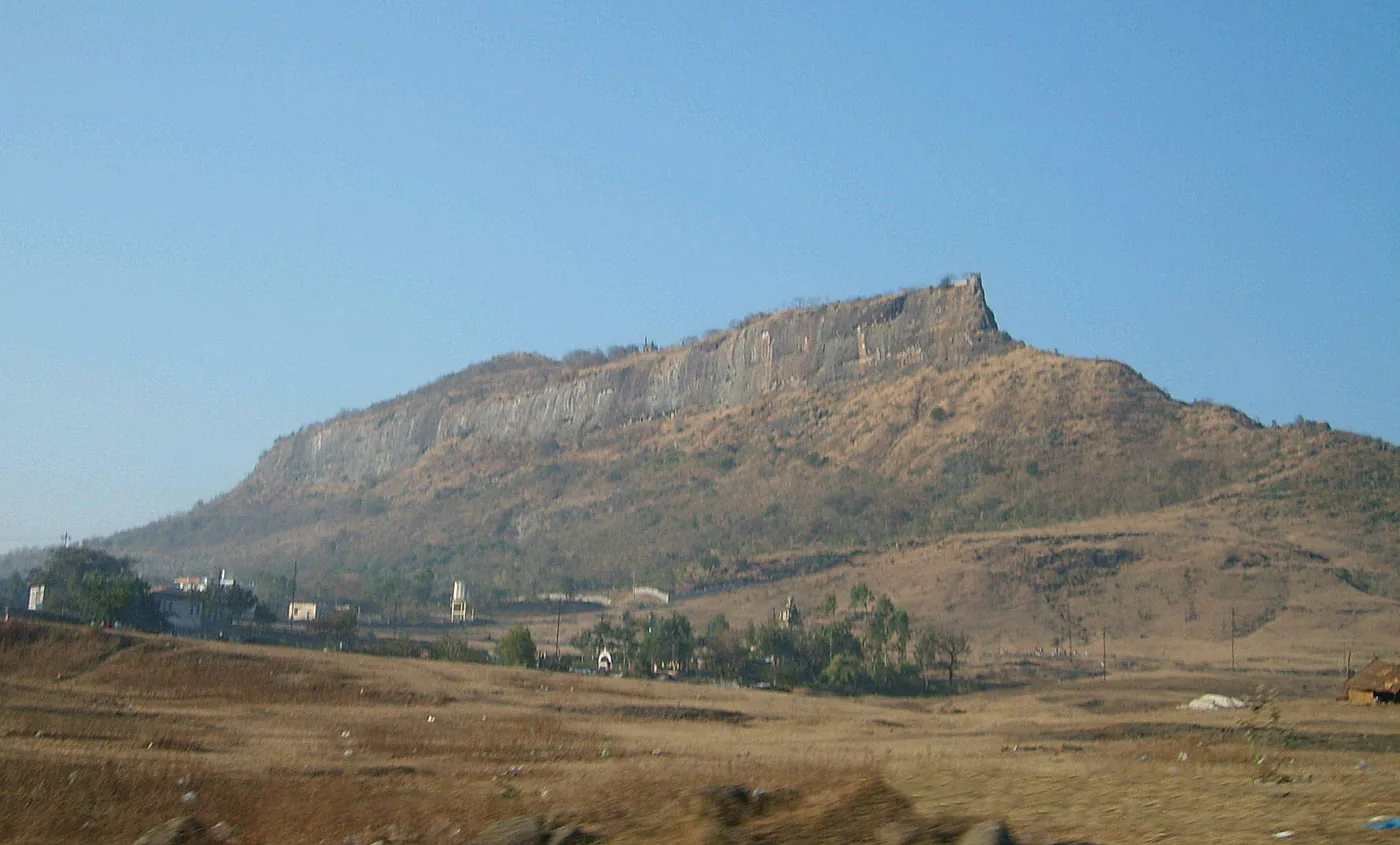
The conversion threat at Junnar
At Junnar the governor, Asad Khan, took his horse. When he learned that Nikitin was a Christian, he made him an offer:
"'I will give thee the horse and a 1000 pieces of gold, if thou wilt embrace our faith, the Mahommedan faith; and if thou wilt not embrace our Mahommedan faith, I shall keep the horse and take a 1000 pieces of gold upon thy head.'" (trans. Wielhorsky)
The khan gave him four days. On the eve of the feast of the Saviour in August, a Khorasani named Muhammad, whom the 1986 translation calls a treasurer, arrived in the town. Nikitin begged him for help; Muhammad spoke to the khan, and Nikitin was neither converted nor deprived of his stallion. He tells the story as a miracle, then turns bitterly to his readers: whoever wants to go to India should "leave his faith in Russia", and
"Those Mussulman dogs have lied to me, saying I should find here plenty of our goods; but there is nothing for our country." (trans. Wielhorsky)
Bidar, the capital of the Bahmani sultans
From Junnar Nikitin went to Bidar, the capital of the Bahmani Sultanate, the Muslim state that ruled most of the Deccan plateau from 1347. He spent several stays there, about four months at the longest, and described the city and its court:
"Beder is the chief town of the whole of Mahomedan Hindostan … The sultan (of Beder) is a little man, twenty years old, in the power of the nobles. Khorassanians rule the country and serve in war." (trans. Wielhorsky)
The sultan was Muhammad III, who according to the 1986 commentary was seventeen when Nikitin arrived and twenty when he left. The real ruler was the man Nikitin calls "Melik-tuchar", from the Persian title malik al-tujjar, "lord of the merchants": the grand vizier Mahmud Gawan, an immigrant from Gilan in Persia. Asad Khan of Junnar, who had threatened Nikitin, was one of Gawan's men. Nikitin's figures for the vizier's 200,000 soldiers and the sultan's 300,000 are hearsay.
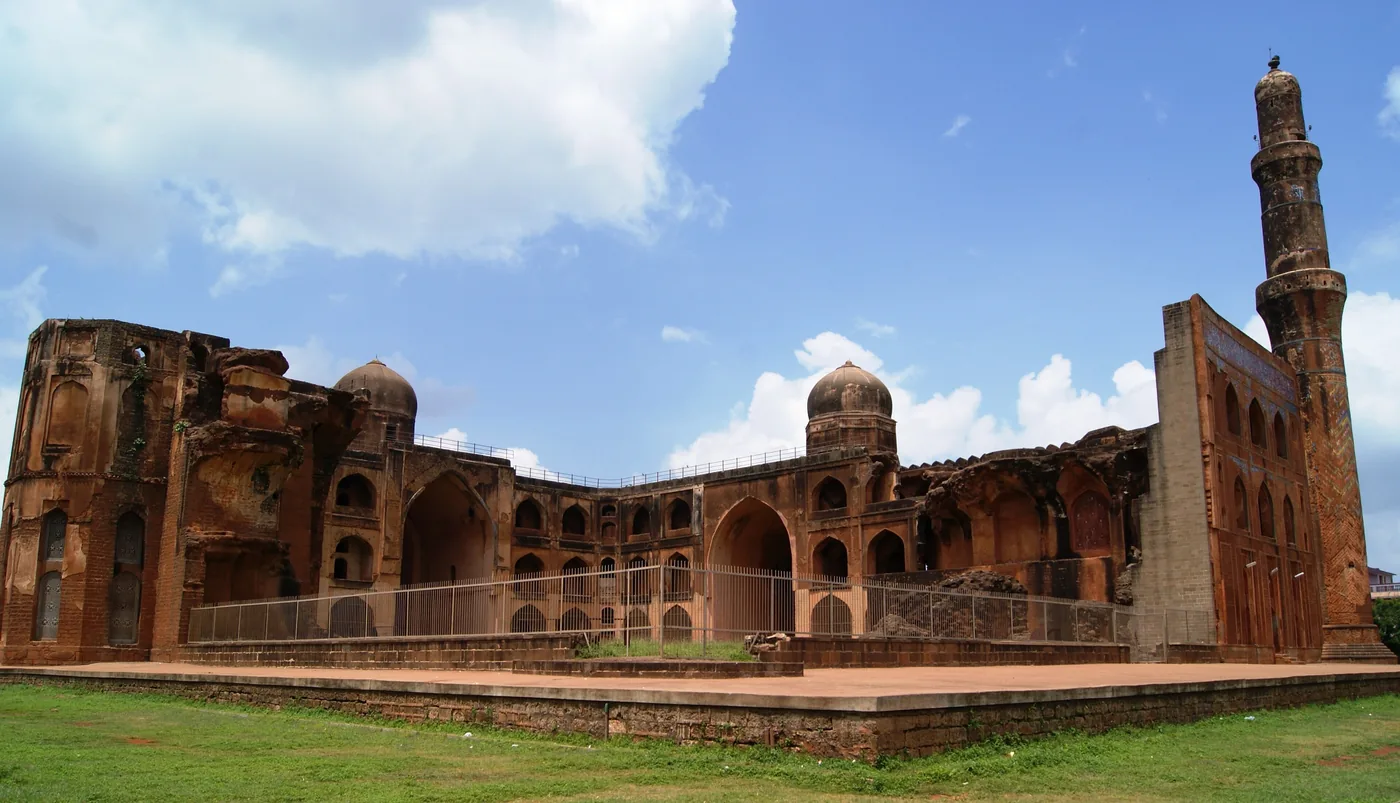
Nikitin's view of India is that of an outsider, often with the prejudices of his time, but he also noticed how he himself was seen: "When I go out many people follow me, and stare at the white man." He describes clothing, food, the ban on eating beef, and the fact that people of different faiths "do not drink, eat or marry with each other" (Semenov translation).
The pilgrimage to Parvat
From Bidar he went with Hindu pilgrims on a month's journey to Parvat, which he called "their Jerusalem". Modern editors identify it with the great Shiva temple at Srisailam. He describes the temple as "half the size of Tver, of stone", carved with the deeds of the god, and a huge black stone statue with a raised right hand, like the statue of the emperor Justinian in Constantinople. The 1986 commentary identifies the god as Shiva and the great stone bull in front of the temple as Shiva's bull Nandi. The 1857 English translation, which calls the god "Buddha", is mistaken.
"I am between the two faiths": Nikitin's religion
The Journey is also the record of a crisis of faith. Nikitin had lost his books when he was robbed and, as he admits, had lost count of the church calendar:
"I have nothing with me; no books whatever; those that I had taken from Russia were lost when I was robbed. And I forgot the Christian faith and the Christian festivals, and know not Easter nor Christmas, nor can I tell Wednesday from Friday, and I am between the two faiths." (trans. Wielhorsky)
In one passage he records a conversation with a Muslim noble in Turkic, written in Cyrillic: "You pray, and I pray too. You pray five times, I pray three times. I am a stranger, and you are from here" (Semenov translation, our English).
Elsewhere, after a phrase in Persian meaning "the faith of Muhammad is fitting", he adds in Russian that "God knows the right faith. And the right faith is to know the one God and call on his name in every pure place." Lur'e warned against reading this as simple religious tolerance: in another passage Nikitin uses "God knows" to express uncertainty. In Bidar he told the Hindus he befriended that he was "not a Muslim but a Christian of the faith of Jesus" (Semenov translation). His final prayer, at the end of the book, is again in a mix of Arabic and Persian.
"May God preserve the Russian land"
The best-known passage of the Journey is written in Turkic, in Cyrillic letters, in the middle of a list of countries on the way home. In L. S. Semenov's translation it says:
"May God preserve the Russian land! … In this world there is no country like it, although the emirs of the Russian land are unjust. May the Russian land be set in order and may there be justice in it!" (Semenov translation, our English)
The 1857 English version renders the same passage without the complaint about the unjust lords: "May God preserve the Russian land … may He bestow his blessing on the dominions of Russia and the Russian nobility, and may the Russian dominion increase." Nikitin hid his criticism of the Russian princes in a foreign language, and some translators passed over it.
The journey home and death before Smolensk
Nikitin decided to go home "on the fifth Easter". He travelled through the Deccan, staying five months at Kallur, a centre of carnelian and diamond work, and saw the army of the Bahmani sultan set out against the Hindu kingdom of Vijayanagara, whose capital it besieged without success. He reached the port of Dabhol and sailed back to Hormuz, touching the coast of Africa, "the Ethiopian mountains", on the way.
From Hormuz he crossed Persia via Shiraz, Isfahan and Tabriz to the camp of Uzun Hasan, ruler of the Aq Qoyunlu, the Turkmen dynasty then dominating Iran and eastern Anatolia. He stayed there ten days and noted the army that Uzun Hasan was sending against the Ottomans. At Trebizond on the Black Sea, now an Ottoman port, officials searched his baggage for letters, because he had come from Uzun Hasan's camp. After storms on the Black Sea he reached Kaffa in the Crimea, then a Genoese colony, "nine days before St Philip's fast", in early November. The text ends there, with a prayer.
What happened next comes only from the chronicle note: he died before reaching Smolensk, and merchants took his notebooks to Moscow.
How did the text survive?
The Journey survives in three versions. The chronicle version was copied into the Sofia II and Lvov chronicles, which go back to a chronicle compilation of the 1480s. Lur'e argued that this compilation was independent of, and even opposed to, the official Moscow chronicles of Ivan III. The Troitsky manuscript, a collection of texts written in the late 15th or early 16th century and once kept at the Trinity-Sergius monastery, preserves a separate version. A third version comes from a 17th-century chronicle compilation.
The historian Nikolai Karamzin found the Troitsky manuscript in the early 19th century; the text was first printed in 1821. The first English translation, by Count Wielhorsky, secretary to the Russian legation, appeared in 1857 in R. H. Major's India in the Fifteenth Century, published by the Hakluyt Society. The standard modern edition, by Ya. S. Lur'e and L. S. Semenov, was published in the Academy of Sciences series Literaturnye pamiatniki in 1986.
The 1857 translation is still widely quoted, but it contains errors. It turns Chapakur in Mazandaran into "Bokhara", and the editors left the foreign-language passages untranslated or misread them, among them the conversation about prayer.
Common myths about Afanasy Nikitin
| Myth | What the evidence says |
|---|---|
| He was the first European in India | Other Europeans, such as the Venetian Niccolò de' Conti, described India earlier; Nikitin is the first known Russian to write about it |
| He was an envoy of Ivan III or Tver | He was a merchant; the envoys were Papin and Hasan-bek, with whom he travelled |
| He travelled in 1466–1472 | An older dating; most specialists now prefer about 1467/68 to 1474/75 |
| He visited Calicut, Ceylon and China | These appear in a list of places he describes from hearsay |
| He saw a statue of Buddha | The 1857 translation's reading; the statue at Parvat was of Shiva |
| He died in Smolensk | The chronicle says he died "before reaching Smolensk" |
| Asad Khan of Junnar was Mahmud Gawan | Two different people: Asad Khan was the vizier's subordinate |
How is Afanasy Nikitin remembered?
Nikitin became a symbol of Russian-Indian friendship in the Soviet period. A monument was put up in Tver (then Kalinin) in 1955, and in 1966 the Soviet post issued a stamp for the "500th anniversary" of the journey, using the old dating. In 1957 the film Pardesi, directed by the Indian writer and director Khwaja Ahmad Abbas together with the Soviet director Vasili Pronin, told his story with Oleg Strizhenov as Nikitin and Nargis among the cast.
The memory continues in India. In 2006–2007 an Indo-Russian expedition retraced his route by road from Tver to Mumbai. In April 2022 the city corporation of Kozhikode (Calicut) in Kerala marked what it called the 550th anniversary of his visit, renamed Customs Road after him and declared Kozhikode a "twin city" of Tver. Whether Nikitin ever visited Calicut is doubtful: the place the 1857 translation calls "Calicut" on his route home is read as "Koilkonda", in the Deccan, in the 1986 edition, and his other mentions of Calicut appear in his list of places described from hearsay.
What the map shows next
The map of 1471 shows the Bahmani Sultanate across the Deccan, with the Vijayanagara Empire to the south. On Nikitin's road home lay the lands of the Aq Qoyunlu and the Ottoman Empire, and on the way out the Grand Principality of Moscow, the Khanate of Kazan, the Golden Horde, the Astrakhan Khanate and Shirvan on the Caspian. Kaffa was a colony of the Republic of Genoa, next to the Crimean Khanate.
Sources
Primary sources
- Khozhenie za tri moria Afanasiia Nikitina, text prepared by M. D. Kagan-Tarkovskaya and Ya. S. Lur'e, trans. L. S. Semenov, commentary by Ya. S. Lur'e and L. S. Semenov, Biblioteka literatury Drevnei Rusi, vol. 7 (Pushkin House): http://lib.pushkinskijdom.ru/Default.aspx?tabid=5068
- "The Travels of Athanasius Nikitin, of Twer", trans. Count Wielhorsky, in R. H. Major (ed.), India in the Fifteenth Century (London: Hakluyt Society, 1857): https://archive.org/details/indiainfifteenth00majorich
Studies
- Ya. S. Lur'e, "Russkii 'chuzhezemets' v Indii XV veka", essay in the BLDR edition (source 1).
- A. G. Bobrov, "Noveishie issledovaniia 'Khozheniia za tri moria' Afanasiia Nikitina", Russkaia literatura 2024, no. 2, 241–254, DOI 10.31860/0131-6095-2024-2-241-254: https://journals.rcsi.science/0131-6095/article/view/259361
- A. L. Lifshits, "Afanasii Nikitin i ego indiiskie putevoditeli", Slavianskoe i balkanskoe iazykoznanie 25 (2025), 195–205: https://doi.org/10.31168/2658-3372.2025.25.10
- M. J. Maxwell, "Afanasii Nikitin: An Orthodox Russian's Spiritual Voyage in the Dar al-Islam, 1468–1475", Journal of World History 17.3 (2006), 243–266, DOI 10.1353/jwh.2006.0049.
- "Kozhikode Corporation pays tribute to Afanasy Nikitin", The Hindu, 17 April 2022: https://www.thehindu.com/news/cities/kozhikode/kozhikode-corporation-pays-tribute-to-afanasy-nikitin/article65329866.ece
- "Pardesi" (1957), Cinemaazi film database (archived): https://web.archive.org/web/20210924123220/https://www.cinemaazi.com/film/pardesi
Image credits
- Title image: Bidar Fort. Photo: Prajwalshinde, 2013, CC BY-SA 4.0, via Wikimedia Commons, cropped to 16:9.
- First page of the Troitsky manuscript (facsimile). Photo: Valerikpunk, CC BY-SA 3.0, via Wikimedia Commons.
- Shivneri hill, Junnar. Photo: Milind.dumbare, public domain, via Wikimedia Commons.
- Madrasa of Mahmud Gawan, Bidar. Photo: Prasannasindol, CC BY-SA 3.0, via Wikimedia Commons.