Jochi (Mongolian Jöchi, died probably 1225) was the eldest son of Genghis Khan and his chief wife Börte. He fought in his father's wars in Siberia and Central Asia, and received the westernmost lands of the empire, the steppes beyond the Irtysh. His sons, above all Batu, turned this inheritance into the realm later called the Golden Horde, which ruled the Rus' principalities for more than two centuries. Its proper name was the ulus (realm) of Jochi.
Jochi is best known for a question his own family raised: was Genghis Khan really his father? His mother had been abducted by the Merkit tribe shortly before he was born. The sources also disagree about when and how he died, and the famous mausoleum in Kazakhstan that bears his name is almost certainly not his grave.
Jochi at a glance
| Name | Jöchi (Mongolian); Tushi in Persian sources; Djuchi in Russian |
| Born | About 1180–1184; no source gives a year |
| Parents | Temüjin (Genghis Khan) and Börte of the Onggirat |
| Brothers | Chaghatai, Ögödei and Tolui |
| Lands | From the Irtysh westwards, "as far as the hoof of Tartar horse had penetrated" (Juvaini) |
| Died | Probably 1225 (older view: early 1227), before his father |
| Sons | Fourteen named by Rashid al-Din, including Orda, Batu, Berke and Shiban |
| Successor | His second son, Batu |
Who was Jochi's father?
The question goes back to the main Mongol source, the Secret History of the Mongols, written in the 13th century. It tells how three Merkit chiefs with 300 men raided the camp of the young Temüjin to take revenge for an old wrong: his father had once seized his mother from a Merkit. They carried off his wife Börte and gave her to a Merkit named Chilger Bökö. Temüjin rescued her with the help of his allies To'oril (Ong Khan of the Kereit) and Jamuqa. The Secret History does not say when Jochi was born, but it lets the reader do the arithmetic.
The Persian historian Rashid al-Din, writing around 1300 for the Mongol rulers of Iran, tells a different story. In his version, Börte was already pregnant when she was taken. The Merkit sent her to Ong Khan, who treated her "as a daughter-in-law", and Genghis sent an officer named Sebe to bring her home. On the way:
"Upon the way a son was suddenly born to her, and for that reason he was called Jochi. Since the road was dangerous and there was no opportunity for halting, it was impossible to make a cradle, and [so] Sebe kneaded a little flour and, wrapping it round the child, took him in his lap so that he might not be harmed." (Rashid al-Din, trans. Boyle)
Rashid's account looks designed to settle the matter. His editor, J. A. Boyle, notes that the Secret History implies instead that the Merkit Chilger Bökö "was Jochi's real father". The Russian historian I. V. Antonov (2013) argues that rumours of a Merkit origin cannot be dismissed entirely, but that contemporaries knew when Börte was taken and when Jochi was born; if the dates had made his Merkit origin obvious, Genghis could not have declared him his son. No evidence exists that could settle the question today.
Does "Jochi" mean "guest"?
A popular explanation says the name means "guest" or "unexpected guest", a hint at his doubtful origin. Boyle calls this an explanation of "later authorities", and adds that Rashid al-Din, who links the name to the sudden birth on the road, "had some other word in mind". The meaning "guest" should be treated as a later folk etymology.
When was Jochi born?
No source gives the year. Rashid al-Din writes that, according to "trustworthy ambassadors" from Jochi's realm, he was "between thirty and forty" when he died; "some say that he died at twenty, but this is altogether wrong". Jochi was older than his brother Ögödei, whose birth year is itself given as 1184 (Boyle), 1185 (Antonov) or 1186 (de Rachewiltz). Boyle reckoned that Jochi was about 43 at his death; Antonov places his birth "around 1180". The range is therefore roughly 1180–1184. The often-quoted year 1182 has no medieval source behind it.
Jochi in Genghis Khan's wars
The Secret History first gives Jochi a command in 1207, the Year of the Hare, when he led the right wing of the army against the "People of the Forest", the Oirat, Kirghiz and other peoples of southern Siberia. They submitted without a fight, and Genghis praised him:
"You, eldest of my sons, who only now for the first time have left home, you have been lucky. Without wounding or causing suffering to man or gelding in the lands where you went, you came back having subjugated the fortunate People of the Forest. I shall give this people to you." (Secret History, §239, trans. de Rachewiltz)
In the war against the Khwarazmian Empire (1219–1221), Jochi led his own army down the Syr Darya, and according to Rashid al-Din took the city of Otrar. In spring 1221 he besieged Urgench (Gurganj), the capital of Khwarazm, together with his brothers Chaghatai and Ögödei. The siege stalled. Rashid al-Din says it was "impossible to capture it because of a disagreement between him and Chaghatai", and Genghis put Ögödei in command. The Secret History adds that, after the city fell, the three brothers divided its people among themselves without giving their father a share, and were barred from his presence for three days.
The historian Roman Hautala (2020) points out that the Persian historian Juvaini, who wrote for the family of Tolui, does not mention Jochi at the siege at all. In his view, writers at the courts of Tolui's descendants, rivals of the Jochids, played down Jochi's role in conquering a city that his family later claimed by right of conquest.
The succession quarrel
The most famous scene in Jochi's life is the family council of 1219, before the war against Khwarazm. One of Genghis's wives, Yisüi, urged him to name an heir. Genghis turned to his eldest son, but Chaghatai spoke first:
"When you say, 'Jochi, speak up!', do you mean by that that you will appoint Jochi as your successor? How can we let ourselves be ruled by this bastard offspring of the Merkit?" (Secret History, §254, trans. de Rachewiltz)
Jochi seized his brother by the collar: "I have never been told by my father the Qan that I was different from my brothers. How can you discriminate against me?" He challenged Chaghatai to an archery contest and a wrestling match. Genghis's companion Kökö Chos rebuked Chaghatai with a poem about Börte's abduction: "It was not her wish: it happened at a time when men met, weapons in hand."
Genghis took Jochi's side:
"How can you speak thus about Jochi? Isn't Jochi the eldest of my sons? In future do not talk like that!" (Secret History, §255, trans. de Rachewiltz)
In the end, neither of the two eldest became heir. Chaghatai himself proposed their younger brother Ögödei, and both agreed to serve him. The scene shows that Jochi's birth was used against him, but also that his father never disowned him.
How did Jochi die?
Rashid al-Din: an illness and a misunderstanding
After the fall of Urgench, Jochi returned to his camps on the Irtysh. According to Rashid al-Din, Genghis had ordered him to conquer the northern lands, the Bulgars, Bashkirs, Rus' and the Cuman steppe, and was angry that he went home instead: "I will put him to death without seeing his face." Jochi fell ill and could not come when summoned. A passing traveller saw Jochi's huntsmen at work and told Genghis that his son was out hunting, not ill. Genghis, furious, ordered an army to march against him. Then news of Jochi's death arrived. When Genghis learned that the report was false, he was "extremely grieved" and searched for the man to put him to death.
Juzjani: poison
A very different story comes from Juzjani, a Persian historian who wrote in Delhi around 1260, far outside the Mongol world and hostile to it. He says that Jochi came to love the Cuman steppe and planned to kill his father in a hunting ground and ally with the Khwarazm-shah. Chaghatai reported this, and Genghis "despatched his own confidential agents, so that they administered poison to Tushi, and killed him" (trans. Raverty). His 19th-century translator, H. G. Raverty, already called parts of this story an error. Antonov regards it as a retelling of rumours, since Juzjani had no access to information from the Mongol court. Later Kazakh tradition has Jochi die in a fall from his horse while hunting wild asses.
1225 or 1227?
The year is disputed. Boyle, in his notes on Rashid al-Din, thought Jochi died "presumably early in 1227", a few months before his father. Most recent scholars prefer 1225. The 13th-century historian Jamal al-Qarshi gives the year 622 of the Islamic calendar, which is 1225, and Rashid al-Din himself implies that Jochi was dead by the autumn of 1225 (Hautala, 2020). Peter Jackson's standard history of the Mongols and the West also gives 1225.
Jochi's sons and the ulus of Jochi
Rashid al-Din names fourteen sons of Jochi and adds that, according to reliable informants, he had "nearly forty". The most important were:
- Orda, the eldest, whose descendants led the eastern wing of the realm.
- Batu, the second son, who succeeded his father and led the conquest of the Volga Bulgars, the Cumans and the Rus' principalities in 1236–1241. See Batu Khan and the Mongol invasion of Rus'.
- Berke, who took power after Batu's son Sartaq and grandson Ulaghchi died, and was a convert to Islam (Jackson).
- Shiban, ancestor of later dynasties in Central Asia and Siberia.
Juvaini describes the lands that Genghis gave Jochi: "the territory stretching from the regions of Qayaligh and Khorazm to the remotest parts of Saqsin and Bulghar and as far in that direction as the hoof of Tartar horse had penetrated". Much of that territory still had to be conquered when Jochi died. His sons conquered it.
Jochi never ruled a "Golden Horde". The name is much later. It first appears in a Russian work of the second half of the 16th century, the History of Kazan (Parunin, 2018). Contemporaries spoke of the ulus of Jochi, and Rus' chroniclers simply of "the Horde".
Is Jochi buried in the Ulytau mausoleum?
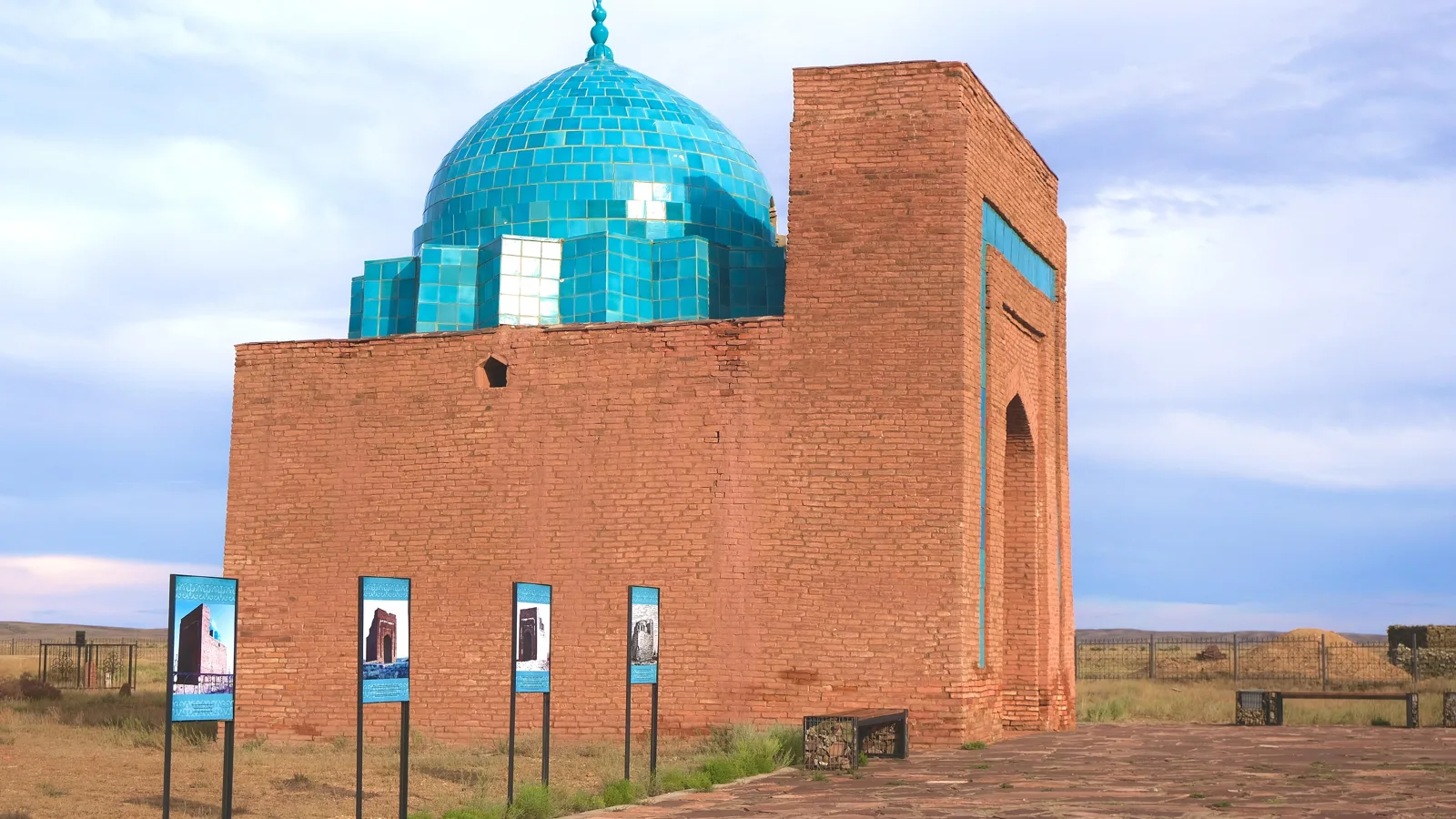
In the Ulytau steppe of central Kazakhstan stands a brick mausoleum with a turquoise dome that Kazakh tradition calls the tomb of Jochi Khan. The archaeologist A. Kh. Margulan excavated it in 1946 and, relying on legend and the finds, suggested that it was Jochi's burial.
Recent studies do not support this. In 2022 a team led by E. R. Usmanova published radiocarbon dates from the wood inside: the coffin box dates to about 1245, plus or minus 25 years, after Jochi's death, and the building itself was put up in two stages in the 14th century. The authors concluded that "the burial of Jochi Khan is absent from the Muslim mausoleum", which may instead hold a member of his family who had converted to Islam. A follow-up study in 2024 found that the building was first recorded under Jochi's name in the 16th century.
Common myths about Jochi
| Myth | What the evidence says |
|---|---|
| Jochi was not Genghis Khan's son | The Secret History records the insult, but Genghis rejected it; Rashid al-Din says Börte was pregnant before her abduction; the truth cannot be known |
| He was born in 1182 | No source gives a year; about 1180–1184 is an estimate |
| His name means "guest" | A later explanation; the source writer Rashid al-Din seems to have meant another word |
| Genghis Khan had him poisoned | Only Juzjani, a hostile writer in Delhi, says so; Rashid al-Din reports illness |
| He died in 1227 | Most historians now prefer 1225 |
| He founded the Golden Horde | His sons built the realm; the name "Golden Horde" dates from the 16th century |
| He is buried in the Ulytau mausoleum | Radiocarbon dates and architecture point to burials after his time |
What the map shows next
The map of 1225 shows the Mongol Empire after the conquest of Khwarazm. West of Jochi's lands lay the steppe of the Kipchak (Cuman) confederation and Volga Bulgaria, the "northern countries" that Rashid al-Din says Genghis ordered Jochi to conquer. Beyond them lay the principalities of Rus', including the Principality of Kiev, which Jochi's son Batu would take in 1240.
Sources
Primary sources
- The Secret History of the Mongols, trans. I. de Rachewiltz, shorter version ed. J. C. Street (Western Washington University, 2015), §§110–111, 239, 254–260 (CC BY-NC-ND; quoted briefly): https://archive.org/details/the-secret-history-of-the-mongols-a-mongolian-epic-chronicle-of
- Rashid al-Din, The Successors of Genghis Khan, trans. J. A. Boyle (New York, 1971), "History of Jochi Khan"
- 'Ala al-Din 'Ata-Malik Juvaini, The History of the World-Conqueror, trans. J. A. Boyle (Manchester, 1958), vol. 1: https://archive.org/details/dli.pahar.3131
- Minhaj al-Din Juzjani, Tabakat-i-Nasiri, trans. H. G. Raverty, vol. 2 (London, 1881): https://archive.org/details/dli.bengal.10689.10017
Studies
- I. V. Antonov, "Chingis-khan i Dzhuchi: problema vzaimootnoshenii", Vestnik Cheliabinskogo gosudarstvennogo universiteta 2013: https://cyberleninka.ru/article/n/chingis-han-i-dzhuchi-problema-vzaimootnosheniy
- R. Hautala, "Rannie dzhuchidskie voennye kampanii…", Zolotoordynskoe obozrenie 8/4 (2020), doi:10.22378/2313-6197.2020-8-4.647-661: https://doi.org/10.22378/2313-6197.2020-8-4.647-661
- E. R. Usmanova et al., "Mavzolei Dzhuchi-khana: realii, legendy i obriad", Arkheologiia evraziiskikh stepei 2022 no. 3, doi:10.24852/2587-6112.2022.3.74.80: https://doi.org/10.24852/2587-6112.2022.3.74.80
- E. R. Usmanova, I. P. Panyushkina and A. D. Iskanderova, study of the Jochi Khan mausoleum, Arkheologiia evraziiskikh stepei 2024 no. 2, doi:10.24852/2587-6112.2024.2.375.388: https://doi.org/10.24852/2587-6112.2024.2.375.388
- P. Jackson, The Mongols and the West, 1221–1410, 2nd ed. (London, 2018)
- A. V. Parunin, "O nekotorykh obstoiatel'stvakh upotrebleniia termina 'Orda' i ego epitetov v pis'mennykh istochnikakh" (2018): https://cyberleninka.ru/article/n/o-nekotoryh-obstoyatelstvah-upotrebleniya-termina-orda-i-ego-epitetov-v-pismennyh-istochnikah
Image credits
- Title image: the mausoleum of Jochi Khan, Ulytau. Photo: Ulytau muzei, 2024, CC BY-SA 4.0, via Wikimedia Commons, cropped to 16:9.
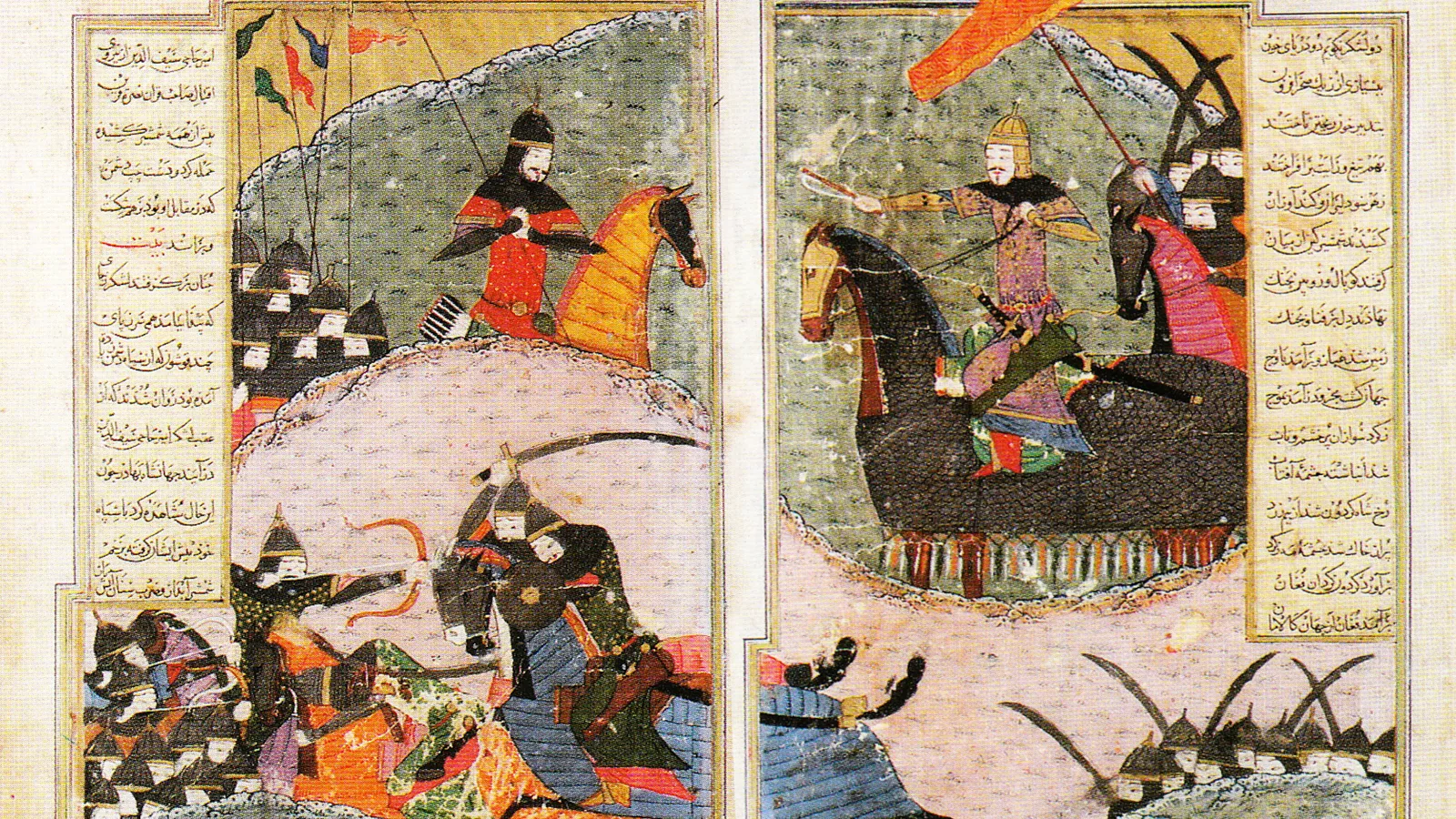
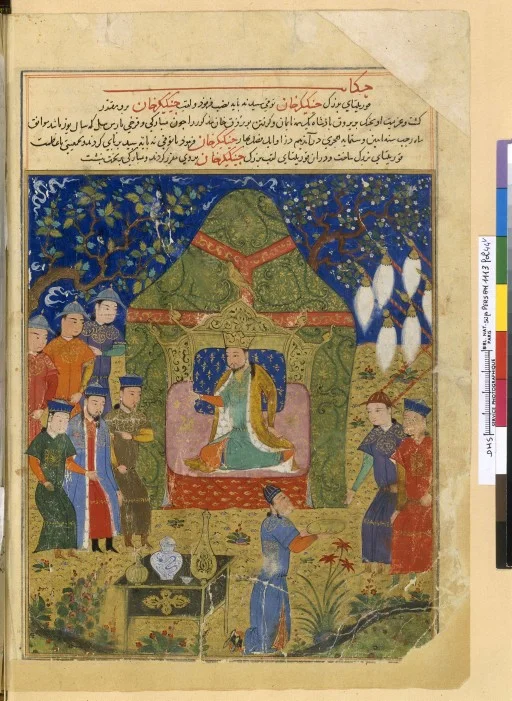
- Genghis Khan with Jochi and Ögödei, BnF Supplément persan 1113. Public domain, via Wikimedia Commons.
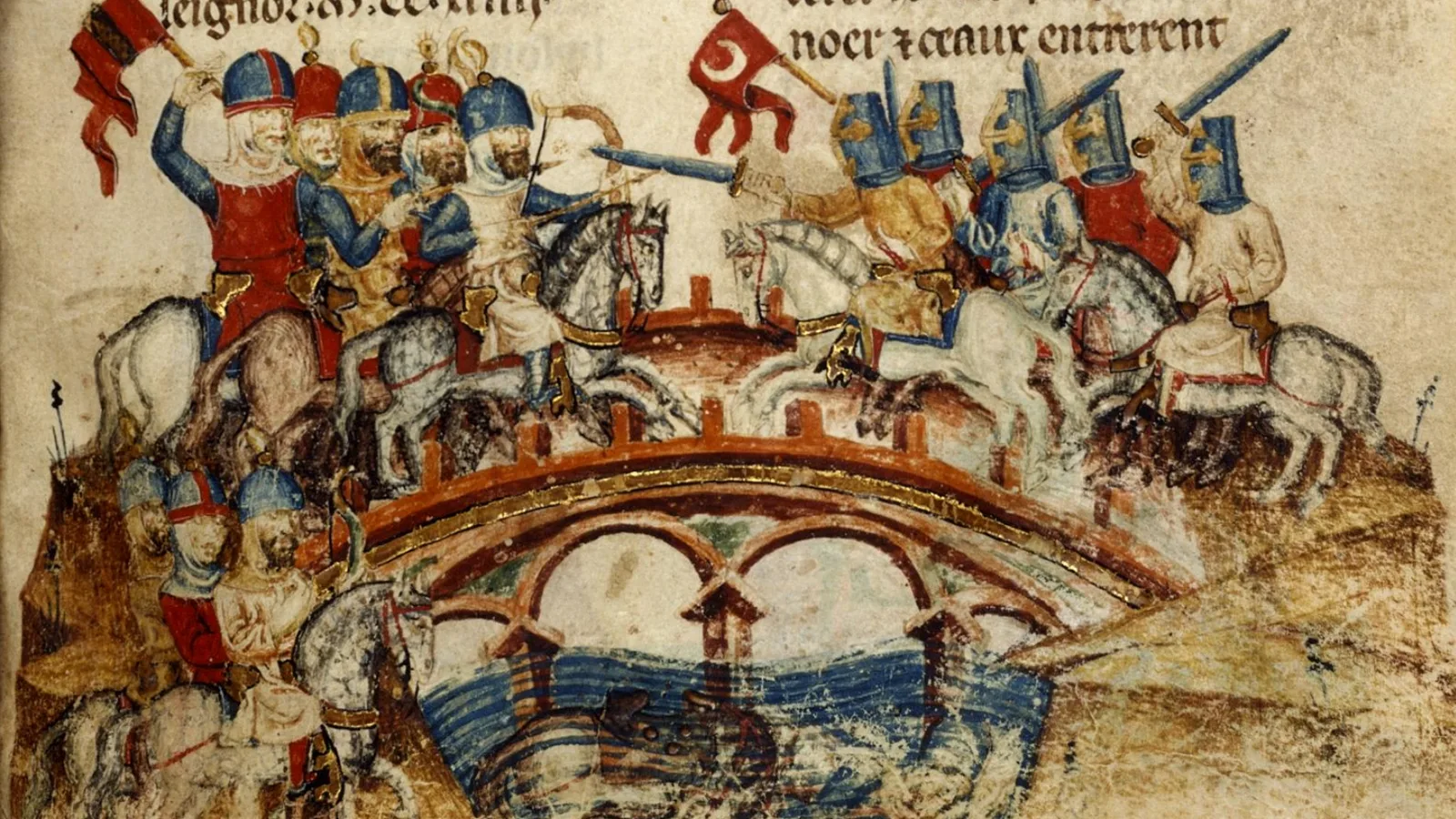
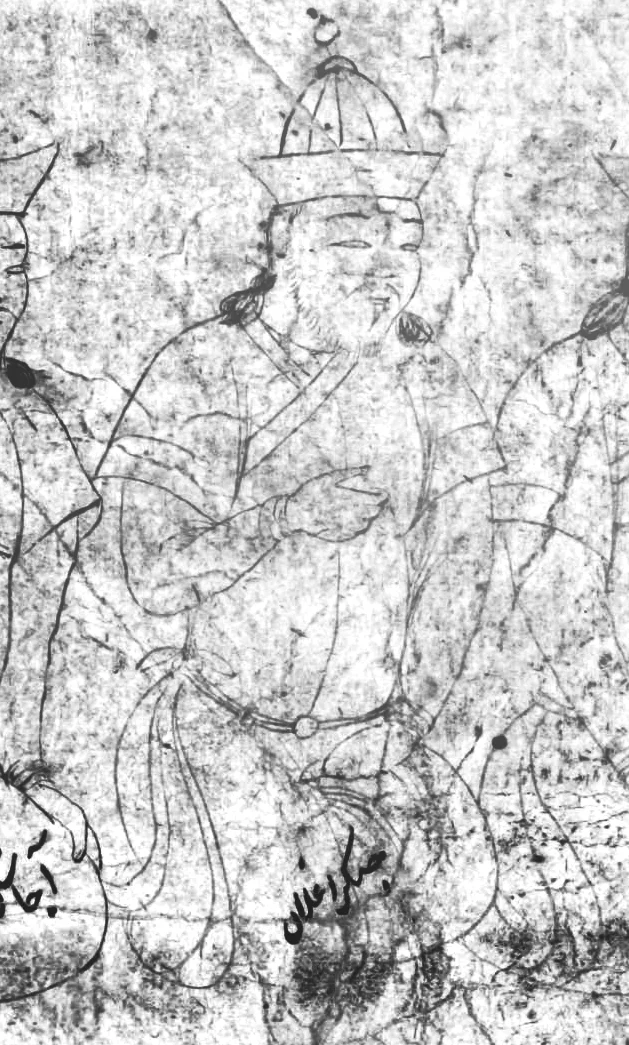
- Chingiz Oghlan, Staatsbibliothek zu Berlin, Ms. Diez A fol. 74. Public domain, via Wikimedia Commons.